
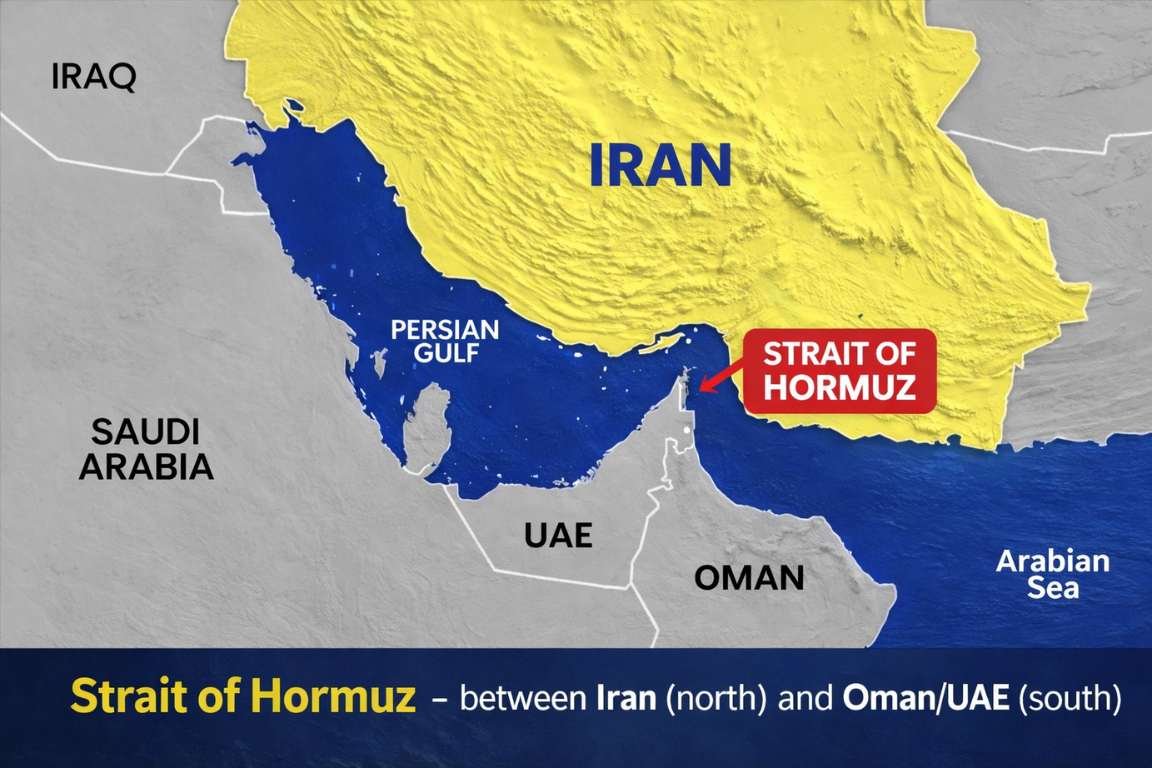
The Strait of Hormuz is one of the most strategically important waterways in the world. Although it appears as a narrow passage on the map, its influence on global trade, energy supply, and international economics is enormous.
Every day, a significant portion of the world’s oil supply travels through this small but vital waterway. Because of its importance, the Strait of Hormuz is frequently mentioned in international discussions related to energy, trade routes, and global security.
For people living in the Gulf region and across the world, understanding the role of this narrow sea passage helps explain how the global energy system operates.
Where is the Strait of Hormuz Located?
The Strait of Hormuz lies between Iran to the north and Oman to the south. It connects the Persian Gulf with the Gulf of Oman, which then leads to the Arabian Sea and the open Indian Ocean.
This narrow channel acts as the only sea route that allows oil-exporting countries in the Persian Gulf to transport their energy resources to the rest of the world.
At its narrowest point, the strait is only about 33 kilometers wide, and the shipping lanes used by large tankers are even narrower. Despite its relatively small size, this route carries an enormous volume of global maritime traffic.
Why the Strait of Hormuz is So Important
The primary reason for the importance of the Strait of Hormuz is energy transportation.
Approximately 20 percent of the world’s oil supply passes through this route every day. Because of this, it is considered the most important oil transit chokepoint in the world.
Several major energy-producing countries rely on this route to export their oil and natural gas to international markets. These include:
- Saudi Arabia
- United Arab Emirates
- Kuwait
- Qatar
- Iraq
These countries supply energy to major economies in Asia, Europe, and other parts of the world. The Strait of Hormuz serves as the gateway through which these resources reach global markets.
A Critical Route for Global Shipping
The Strait of Hormuz is not only essential for oil transportation but also for broader international shipping.
Large oil tankers, liquefied natural gas carriers, and cargo ships regularly pass through the strait. These vessels transport energy resources and goods to major global markets including:
- China
- India
- Japan
- South Korea
- Europe
For many Asian economies in particular, this route is vital for maintaining a steady supply of energy required to power industries, transportation systems, and electricity generation.
Why It Is Called a Strategic “Chokepoint”
In global trade and maritime terminology, certain narrow routes are known as chokepoints. These are places where large volumes of shipping must pass through limited geographic spaces.
The Strait of Hormuz is widely considered the most important energy chokepoint in the world.
Other well-known chokepoints include the Suez Canal, the Panama Canal, and the Strait of Malacca. However, none of them handle as much oil transportation on a daily basis as the Strait of Hormuz.
Impact on the Global Economy
Because such a large share of the world’s oil passes through this route, developments related to the Strait of Hormuz can influence global markets.
Changes affecting this region can impact:
- Global oil prices
- Fuel costs in different countries
- International shipping costs
- Energy supply chains
When energy prices fluctuate, the effects can be seen in transportation costs, airline ticket prices, electricity generation, and the cost of goods worldwide.
Navigation and Security
Due to its global significance, the Strait of Hormuz is one of the most closely monitored waterways in the world.
Shipping lanes within the strait are carefully organized to ensure safe navigation for the large number of vessels passing through each day. International maritime systems and regional security measures help maintain smooth shipping operations in this vital corridor.
A Small Passage with Global Importance
Although it appears small on a map, the Strait of Hormuz plays an enormous role in the functioning of the global economy.
It serves as the main gateway through which a large portion of the world’s energy supply moves from the Gulf region to international markets. This makes it one of the most strategically important maritime routes in the modern world.
Understanding the importance of the Strait of Hormuz helps highlight how interconnected the global economy is and how a narrow waterway can influence energy supply, trade routes, and economic stability across the planet.