
As a Nepalese who has spent a significant part of my life in the UAE, I closely observe how governance, leadership, and institutions function, both here and back home in Nepal. Over the years, one pattern from Nepal has become painfully consistent. Our decision-makers are experts at identifying problems but remarkably weak when it comes to proposing and executing solutions.
Every minister, bureaucrat, and political leader knows what is wrong with Nepal.
Unemployment.
Brain drain.
Climate vulnerability.
Water management.
Weak institutions.
Policy paralysis.
Yet, when they speak, what we mostly hear is repetition of problems, excuses for inaction, and blame shifting. What we rarely hear are clear, time-bound, and accountable solutions.
A Moment of Reflection in Kathmandu
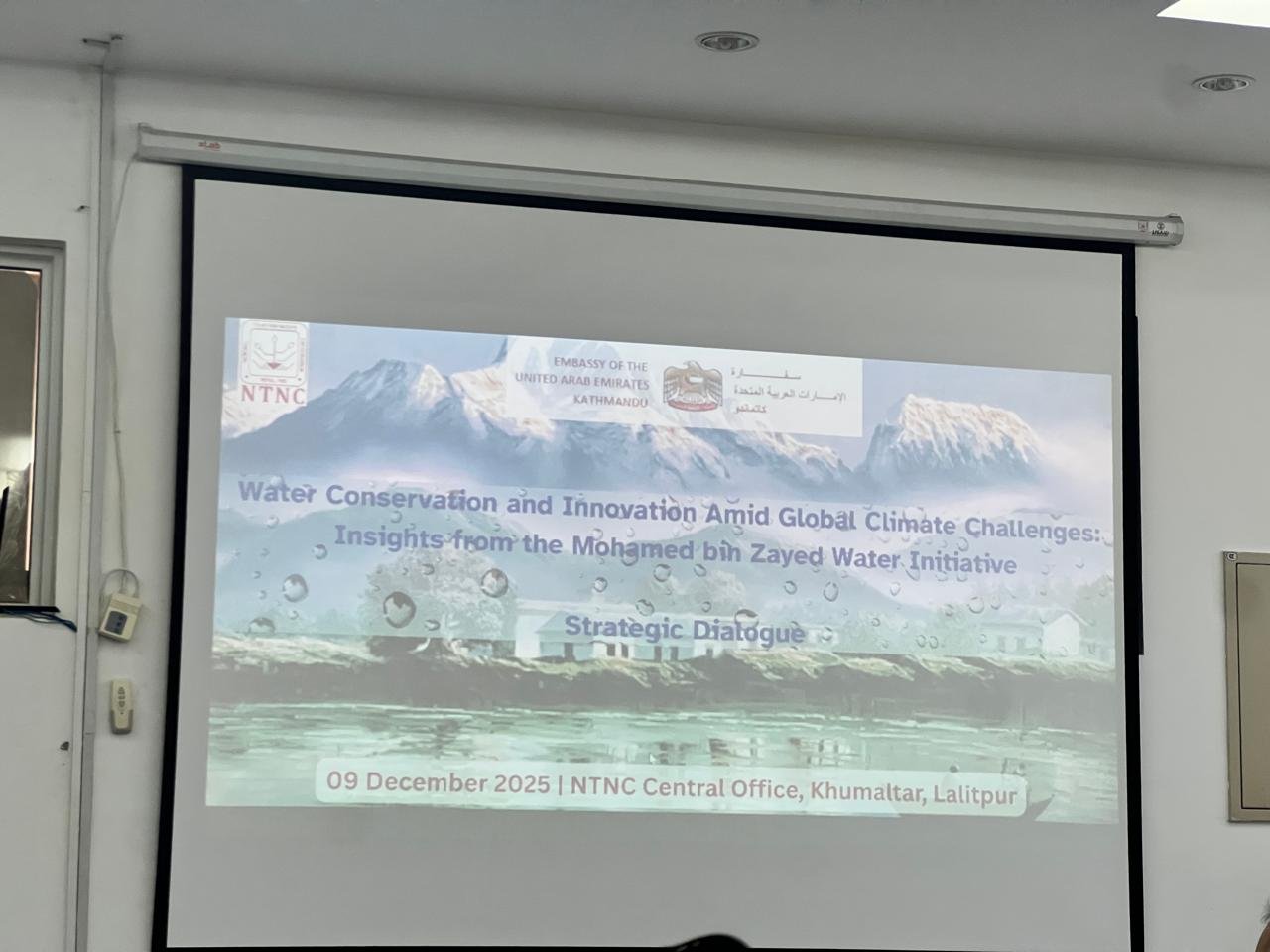
During my recent visit to Nepal, I had the opportunity to attend a Strategic Dialogue organized by the UAE Embassy in Kathmandu. The discussion focused on conservation and innovation amid global climate challenges, with insights drawn from the Mohamed bin Zayed Water Initiative.
Such events are important. They provide exposure, learning, and a chance to understand how nations approach complex global challenges through policy, innovation, and execution.
The presentation from the UAE side was particularly striking. A country with extreme water scarcity spoke confidently about water conservation through advanced technology, innovation-driven policy, and long-term planning. The narrative was not centered on limitations but on solutions, ownership, and measurable action.
That contrast was impossible to ignore.
Awareness Is Not the Missing Link
On the Nepalese side, government officials openly acknowledged the challenges Nepal faces, particularly the lack of adequate funding for climate change mitigation and water conservation projects. This concern is real and valid. Large-scale environmental initiatives require resources, coordination, and sustained investment.
However, what stood out was not a lack of awareness but a lack of clarity around execution. There was little discussion on what concrete actions are currently underway, what pilot projects are being tested, who owns those initiatives, or how progress is measured.
Nepal does not suffer from ignorance of its challenges. The issue lies in moving beyond acknowledgment to implementation.
A Simple Question, A Telling Response
During the dialogue, I asked a simple and practical question. Is Nepal doing something concrete for rainwater conservation?
The response was honest but revealing. The government is still studying the feasibility.
Feasibility studies are important, especially at the early stages of policy formulation. But when climate change is no longer a future concern and has already become a lived reality, prolonged study without visible pilot action raises serious questions.
For a country like Nepal, which receives substantial seasonal rainfall, the absence of widespread rainwater harvesting initiatives represents a significant missed opportunity.
Funding Is a Challenge, But So Is Engagement
If funding is the primary barrier, then the next logical question is how Nepal plans to mobilize support.
During the same discussion, I shared a belief shaped by years of working with the Nepalese community abroad. If the Government of Nepal can create clear, transparent, and credible opportunities, Nepalese working overseas are ready to support initiatives related to climate change and water conservation.
Nepalese abroad are not detached observers. They are emotionally connected, economically active, and willing to contribute, not merely through donations but through structured, accountable investment mechanisms.
What is required is trust, clarity, and assurance that participation leads to measurable impact.
Learning Through Exposure
This reflection is not about comparing Nepal and the UAE as equals. Their contexts, resources, and challenges differ. However, exposure to how another country approaches scarcity through innovation, accountability, and execution naturally shapes expectations.
Events like the Strategic Dialogue organized by the UAE Embassy are valuable because they highlight what is possible when vision is backed by action. The real test begins after the event ends, when ideas must be adapted and implemented within local systems.
The Way Forward
Nepal does not lack dialogue, reports, or stated intentions. What it needs is a stronger bridge between discussion and execution, faster movement from feasibility to pilot projects, and clear frameworks that invite Nepalese abroad to participate as partners rather than spectators.
Leadership must be measured not by speeches delivered or problems identified, but by solutions implemented and outcomes achieved.
This perspective comes from care, not criticism. It comes from witnessing functioning systems elsewhere and wanting Nepal to progress with the same sense of urgency, ownership, and confidence.
Nepal’s challenges are real. So is its potential.
The shift we need is not in understanding the problems, but in owning the solutions.
Shekhar Chapagain
Nepalese in the UAE