
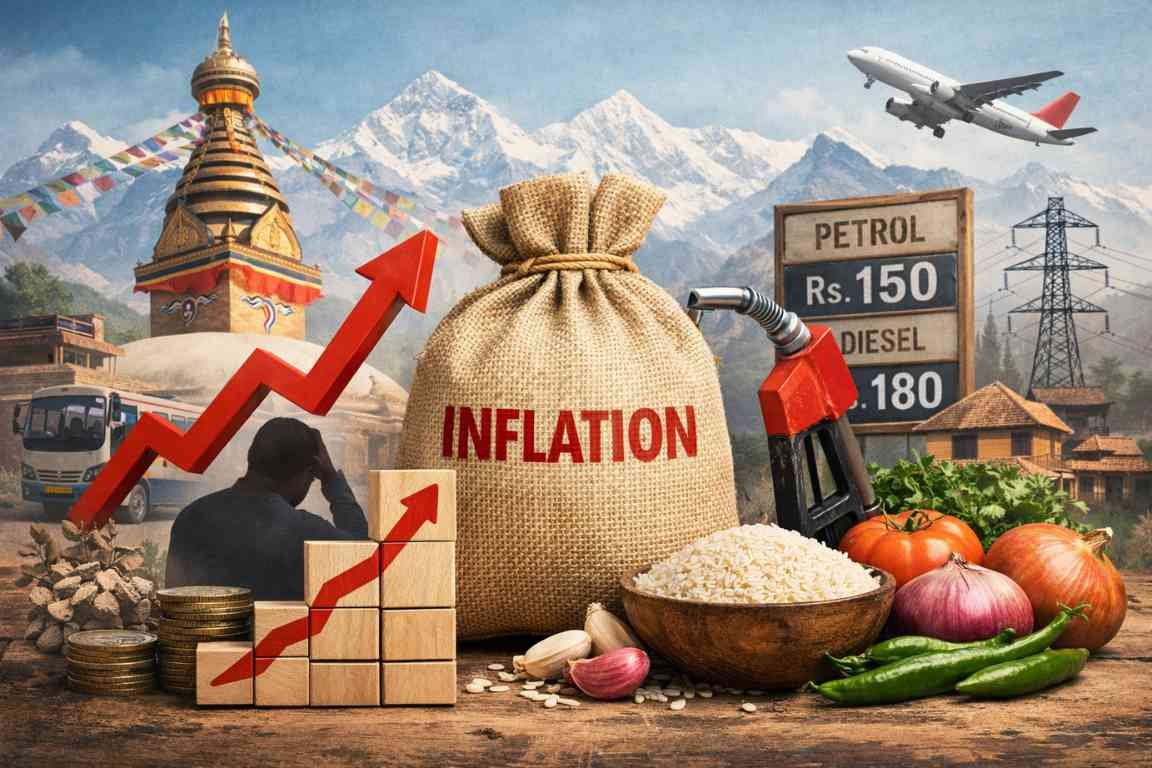
In recent years, many Nepalese have noticed one clear reality: the price of almost everything is increasing.
Rice, cooking oil, vegetables, fuel, rent, and transportation—everything seems more expensive than before. The same salary that used to cover monthly expenses now feels insufficient.
This phenomenon is called inflation.
Understanding inflation is very important because it directly affects our savings, salary, business, investments, and daily life.
Let us understand inflation in a simple way.
What Is Inflation?
Inflation is the increase in the overall price of goods and services over time. When inflation occurs, the value of money decreases. This means the same amount of money buys fewer goods than it did before.
For example:
| Year | Price of Rice | Your Money |
|---|---|---|
| 2020 | Rs 60 per kg | Rs 100 buys 1.6 kg |
| 2025 | Rs 90 per kg | Rs 100 buys 1.1 kg |
Your Rs 100 did not change, but its purchasing power decreased.
This is inflation.
A Simple Example Every Nepalese Understands
Imagine this situation.
Ten years ago in Nepal:
- A plate of momo: Rs 50
- Bus fare inside city: Rs 10
- Petrol: Rs 100 per litre
Today:
- Momo: Rs 150–200
- Bus fare: Rs 20–30
- Petrol: Rs 180+
Prices increased, but salary growth did not increase at the same speed.
This gap is what makes inflation painful.
How Inflation Is Measured
Inflation is usually measured through something called the Consumer Price Index (CPI).
This index tracks the prices of common items people buy, such as:
- Food
- Fuel
- Transportation
- Housing
- Clothing
- Healthcare
If the average price of this “basket of goods” increases, inflation rises.
In Nepal, this data is monitored by Nepal Rastra Bank and government economic institutions.
Main Causes of Inflation in Nepal
Inflation does not happen randomly. Several factors contribute to rising prices in Nepal.
Rising Food Prices
Food inflation is one of the biggest concerns in Nepal.
Items like rice, lentils, vegetables, and cooking oil frequently increase in price due to supply shortages, transportation costs, or global market changes.
Since food takes a large share of Nepalese household spending, inflation hits families very quickly.
Nepal’s Dependence on Imports
Nepal imports a large portion of goods, including:
- Petroleum
- Electronics
- Machinery
- Vehicles
- Raw materials
Because of this, when global prices increase, Nepal automatically experiences inflation.
Economists often say Nepal sometimes “imports inflation” from other countries.
Inflation in India
Nepal imports a large amount of goods from India.
Because the Nepalese economy is closely connected to India, price increases there often affect Nepal as well.
This is why many people say that when prices rise in India, Nepal also feels the impact.
Fuel Price Increases
Fuel plays an important role in the economy.
Petroleum products are used for:
- Transportation
- Manufacturing
- Agriculture
When fuel becomes expensive, the cost of transporting goods increases, and eventually everything becomes more expensive.
Currency Weakness
If the Nepalese rupee weakens against international currencies such as the US dollar, imports become more expensive.
Since Nepal imports many essential goods, this situation contributes to higher inflation.
Types of Inflation
Economists generally classify inflation into different categories.
Demand-Pull Inflation
This happens when demand is higher than supply.
For example, if many people want to buy a product but production is limited, prices increase.
Cost-Push Inflation
This occurs when the cost of producing goods increases.
Examples include:
- Higher wages
- Expensive raw materials
- Higher transportation costs
Businesses then increase prices to maintain profitability.
Imported Inflation
This type of inflation occurs when price increases in other countries affect Nepal through imports.
Since Nepal depends heavily on imported goods, this type of inflation is quite common.
Effects of Inflation on Nepalese People
Inflation affects nearly every household.
Reduced Purchasing Power
The biggest impact is that money loses value.
You need more money to buy the same things that were cheaper before.
Harder Life for Fixed Salary Workers
People with fixed incomes are affected the most, including:
- Government employees
- Factory workers
- Pensioners
Their income does not increase as quickly as prices.
Savings Lose Value
When inflation rises, money kept in savings slowly loses its purchasing power.
If the interest rate earned on savings is lower than the inflation rate, the real value of the savings decreases over time.
Business Uncertainty
Inflation also creates challenges for businesses.
Companies may struggle to predict:
- Future costs
- Raw material prices
- Profit margins
This uncertainty can slow economic growth.
Is Inflation Always Bad?
Surprisingly, not all inflation is harmful.
A small level of inflation is considered normal and even healthy for an economy.
Moderate inflation encourages:
- Investment
- Spending
- Economic growth
However, very high inflation can damage the economy and reduce people’s living standards.
Inflation and Migration of Nepalese Workers
Inflation is also connected to the migration of many Nepalese people abroad.
Many individuals leave Nepal because:
- Wages are relatively low
- Living costs continue to rise
- Job opportunities are limited
Millions of Nepalese work in countries such as the UAE, Qatar, Saudi Arabia, Malaysia, and other destinations to earn higher income and support their families.
The money they send home plays a major role in supporting Nepal’s economy.
How Nepalese Families Can Protect Themselves From Inflation
Although individuals cannot control inflation, they can take steps to reduce its impact.
Invest Instead of Only Saving
Money kept idle may lose value over time.
People may consider options such as:
- Mutual funds
- Stocks
- Small businesses
- Productive assets
These can help money grow faster than inflation.
Increase Income Skills
One of the best protections against inflation is higher earning potential.
Learning new skills such as digital marketing, technology, freelancing, or entrepreneurship can help individuals increase their income.
Diversify Income Sources
Depending on only one source of income can be risky.
Many families benefit from developing additional income sources such as:
- Side businesses
- Freelancing
- Investments
Multiple income streams can provide better financial stability.
Final Thoughts
Inflation is not just an economic concept used by experts.
It is something that every Nepalese family experiences in daily life.
When vegetables become expensive, when petrol prices increase, and when rent rises, it is inflation affecting everyday living.
Understanding inflation helps people make smarter decisions about saving, investing, earning, and spending.
In today’s world, financial awareness is becoming one of the most important skills for Nepalese individuals both at home and abroad.