
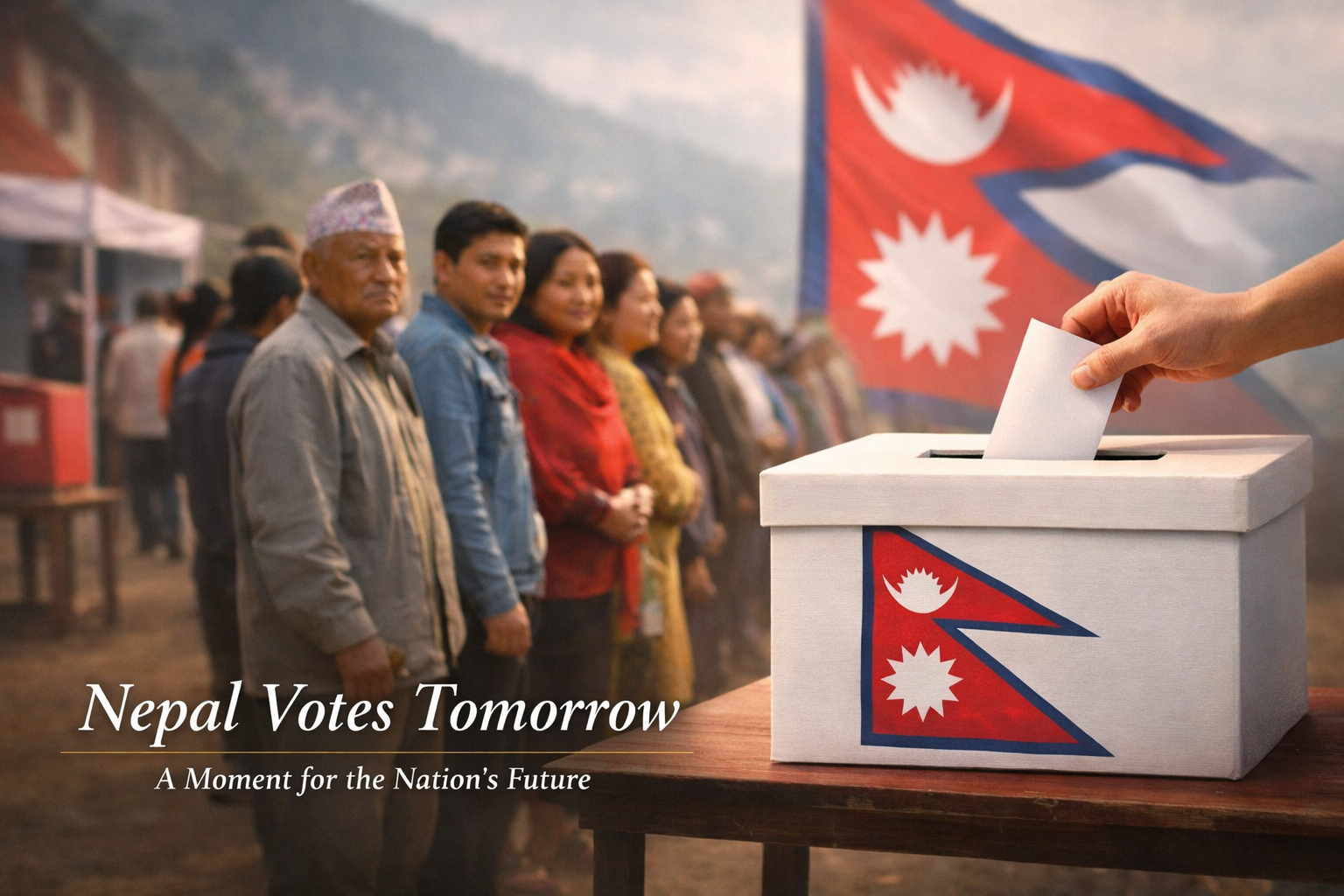
Tomorrow marks an important day in Nepal’s democratic journey. Elections are not just about casting a vote; they are about shaping the direction of a nation, determining leadership, and deciding what kind of future the country will move toward. For millions of Nepalese citizens back home, the ballot they cast tomorrow carries the weight of expectation, frustration, hope, and responsibility.
For Nepalese living abroad, including the large community here in the United Arab Emirates, elections in Nepal are always emotional moments. Even though we may not physically stand in line at polling stations, our hearts remain connected to the homeland. Many of us left Nepal in search of opportunities, stability, and better livelihoods, but our hopes for a prosperous and stable Nepal have never faded.
Over the years, Nepal’s political journey has seen many ups and downs. Promises have been made repeatedly during election seasons—promises of development, employment, good governance, and economic stability. Yet, many citizens still feel that progress has been slower than expected. Infrastructure has improved in some areas, but challenges remain in governance, economic growth, job creation, and institutional stability.
For a country like Nepal, elections are not simply routine political events; they are opportunities to correct direction. Every election gives voters a chance to reward leaders who performed well and reject those who failed to deliver. Democracy functions best when citizens vote with awareness, not emotion alone.
Nepal today stands at an important crossroads. The country is full of potential: natural beauty that attracts global tourism, a young workforce eager to contribute, and a resilient society that has endured political transitions, natural disasters, and economic challenges. However, potential alone does not create prosperity. Visionary leadership, accountable governance, and long-term policy stability are required to transform that potential into reality.
Many Nepalese working overseas often ask a painful question: why do so many young people still need to leave Nepal to find opportunities abroad? Remittances have become a backbone of Nepal’s economy, and the contributions of migrant workers are immense. But at the same time, the reality that millions must leave home for work highlights deeper structural issues within the country.
This election is therefore more than a political contest. It is an opportunity to reflect on what kind of Nepal the people truly want. Do citizens want politics driven by personality and short-term slogans, or leadership focused on policy, accountability, and national development?
The responsibility lies not only with politicians but also with voters. A strong democracy requires informed citizens who evaluate candidates based on competence, integrity, and their track record—not just speeches or party loyalty.
For Nepalese living abroad, tomorrow is also a moment to reflect on our role. While we may not vote directly, we contribute to the nation in many ways: through remittances, investment, knowledge transfer, and by sharing global perspectives. The diaspora community has the potential to influence Nepal’s development positively, but ultimately the foundation of change must come from responsible leadership and active citizenship inside the country.
At the same time, elections should never divide families, communities, or society. Political opinions may differ, but respect for democratic processes must remain stronger than political differences. Nepal has come a long way in building its democratic institutions, and protecting that progress is the responsibility of everyone.
As voters head to the polling booths tomorrow, the hope across the country—and among Nepalese around the world—is simple: that leaders chosen by the people will place the nation’s interest above personal ambition, that promises will translate into action, and that the next chapter of Nepal’s political journey will move the country toward stability, prosperity, and opportunity.
Democracy works best when citizens remain vigilant even after the votes are counted. Elections are only the beginning. Accountability, transparency, and public participation must continue long after the ballots are cast.
Tomorrow, Nepal decides again.
And with that decision comes another chance to move the nation forward.